
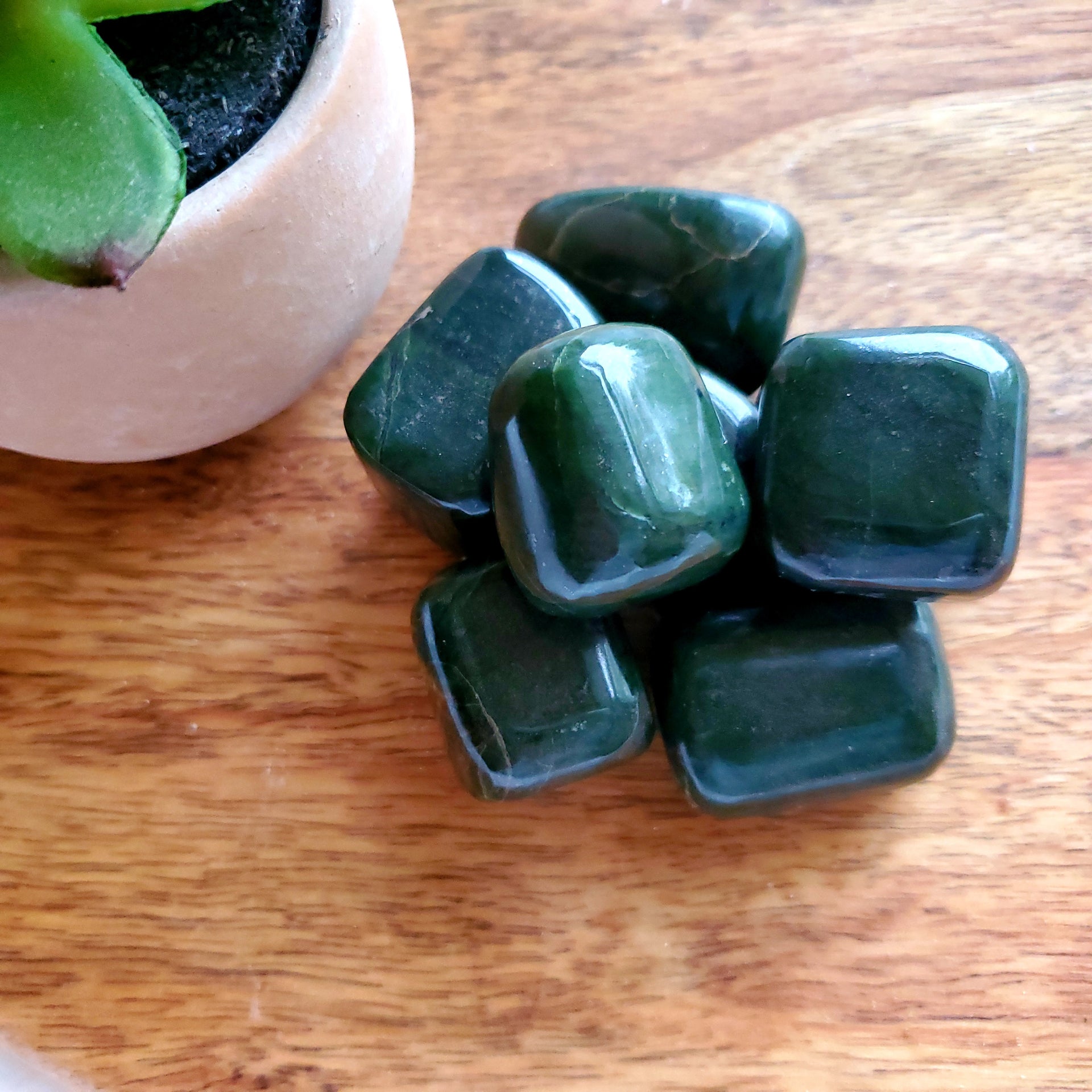
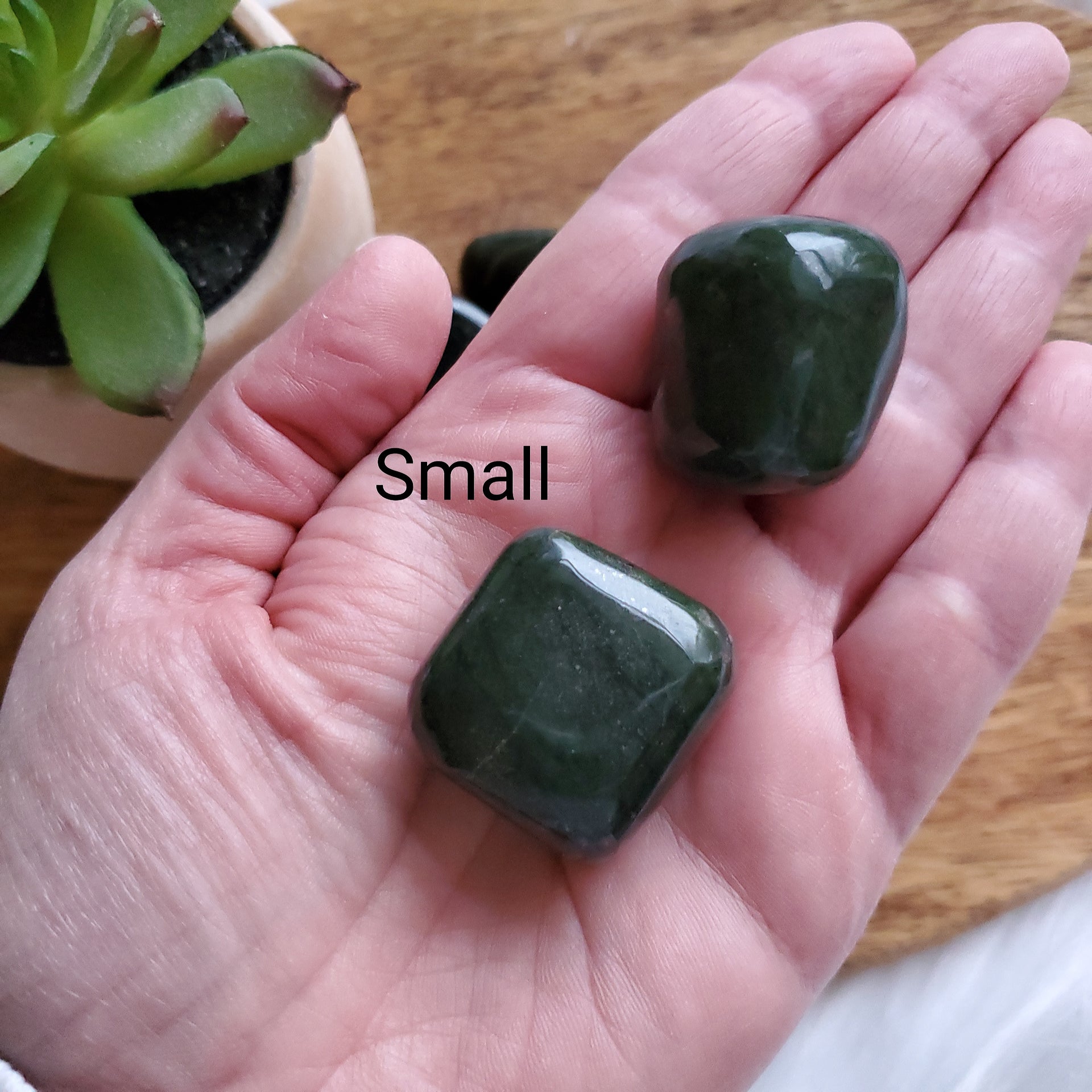
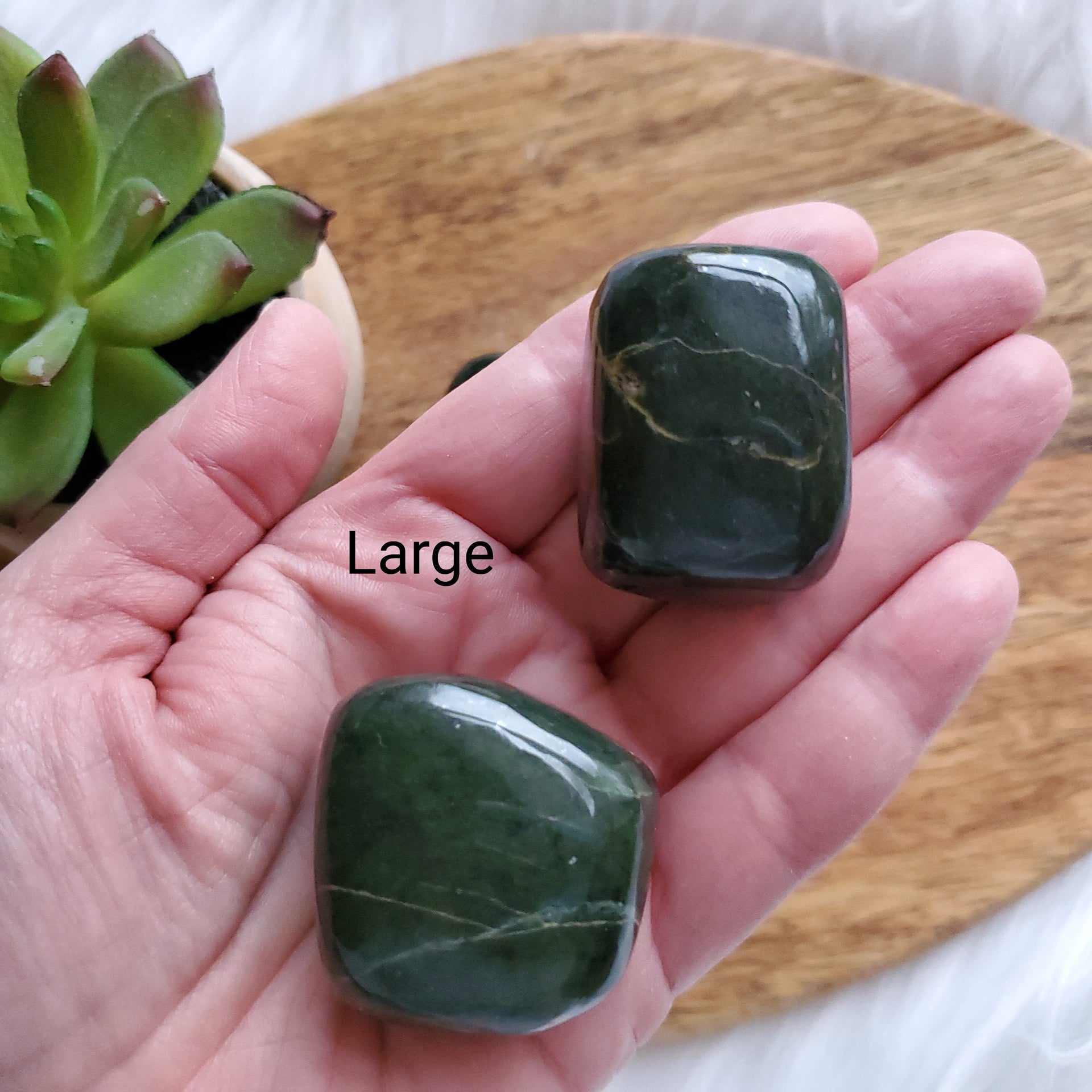
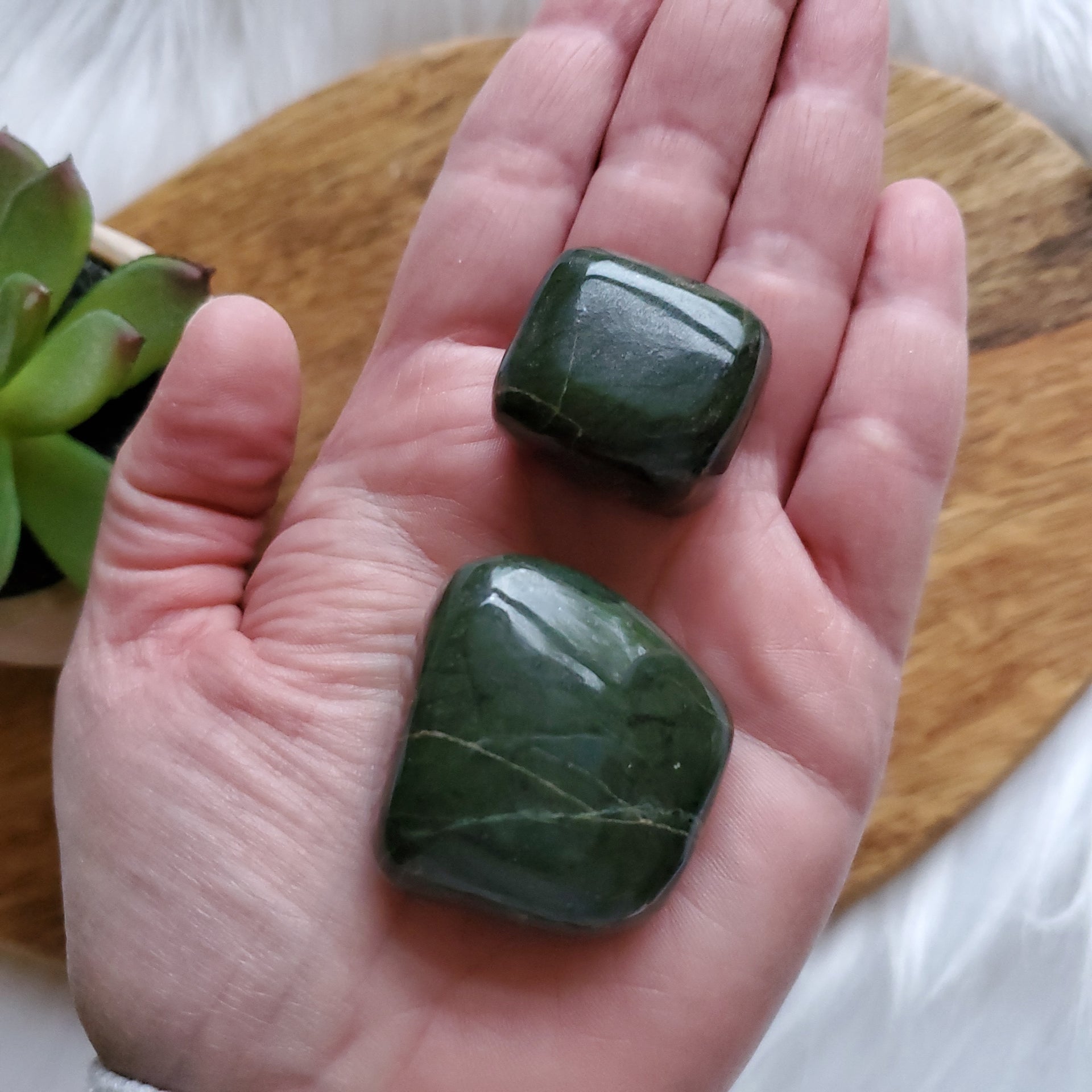
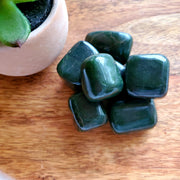
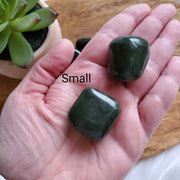
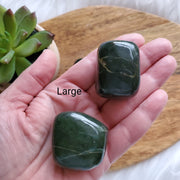
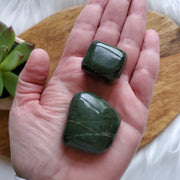
JADE TUMBLE
JADE TUMBLE
Jade
This beautiful Jade Tumble carries the energy of one of the most revered and culturally significant stones in human history — prized for over 7,000 years across China, Mesoamerica, and the Pacific, Jade's deep green color and powerful energy of luck, prosperity, and protection have made it a sacred stone across virtually every civilization that has encountered it.
Note: The name "Jade" refers to two distinct minerals — Nephrite (a calcium magnesium silicate) and Jadeite (a sodium aluminum silicate). Both are called Jade and share similar cultural significance, but they are mineralogically different stones. Nephrite is the more common variety and has been used in China and the Pacific for thousands of years; Jadeite is rarer and was prized by Mesoamerican civilizations including the Maya and Aztec. Most Jade available in the crystal market is Nephrite unless specifically labeled as Jadeite.
Where It Is Found
Nephrite Jade is found primarily in Canada (British Columbia, one of the world's largest producers), China, Russia, New Zealand (where it is called Pounamu and is deeply sacred to the Māori people), Australia, and the United States (Wyoming). Jadeite is found primarily in Myanmar (Burma), which produces the finest gem-quality Jadeite in the world, as well as in Guatemala, Japan, and Russia.
Mineral Class / Geology
Nephrite is a variety of the mineral Actinolite (calcium magnesium iron silicate) belonging to the Amphibole mineral group within the Inosilicate mineral class. Its hardness is 6–6.5 on the Mohs scale. Jadeite is a sodium aluminum silicate belonging to the Pyroxene mineral group, with a hardness of 6.5–7 on the Mohs scale. Both form in high-pressure metamorphic environments. Nephrite forms in serpentinized ultramafic rocks; Jadeite forms in subduction zone metamorphic rocks under extremely high pressure. Despite their different mineralogy, both are exceptionally tough — Jade is one of the toughest natural materials on Earth, more resistant to breaking than steel.
Colors
Jade displays a wide range of greens — from pale celadon and apple green to deep forest green and rich emerald. The most prized Jadeite is the vivid "Imperial Jade" — a translucent, intensely saturated emerald green colored by chromium. Nephrite tends toward deeper, more muted greens with a waxy luster. Both can also occur in white, lavender, yellow, orange, black, and other colors.
Metaphysical Properties
Jade is known as the Stone of Luck, Prosperity, and Protective Wisdom. It is one of the most universally revered stones in the world, considered sacred across Chinese, Mesoamerican, Māori, and many other cultural traditions. It resonates with the Heart Chakra and is used to attract good luck, abundance, and prosperity, provide powerful protection against negative energies and harm, open the heart to love and nurturing relationships, enhance wisdom, clarity, and sound decision-making, support longevity and physical wellbeing, connect with ancestral wisdom and protective spiritual forces, and bring a deep sense of peace, harmony, and balance.