
JET TUMBLE
JET TUMBLE
Jet
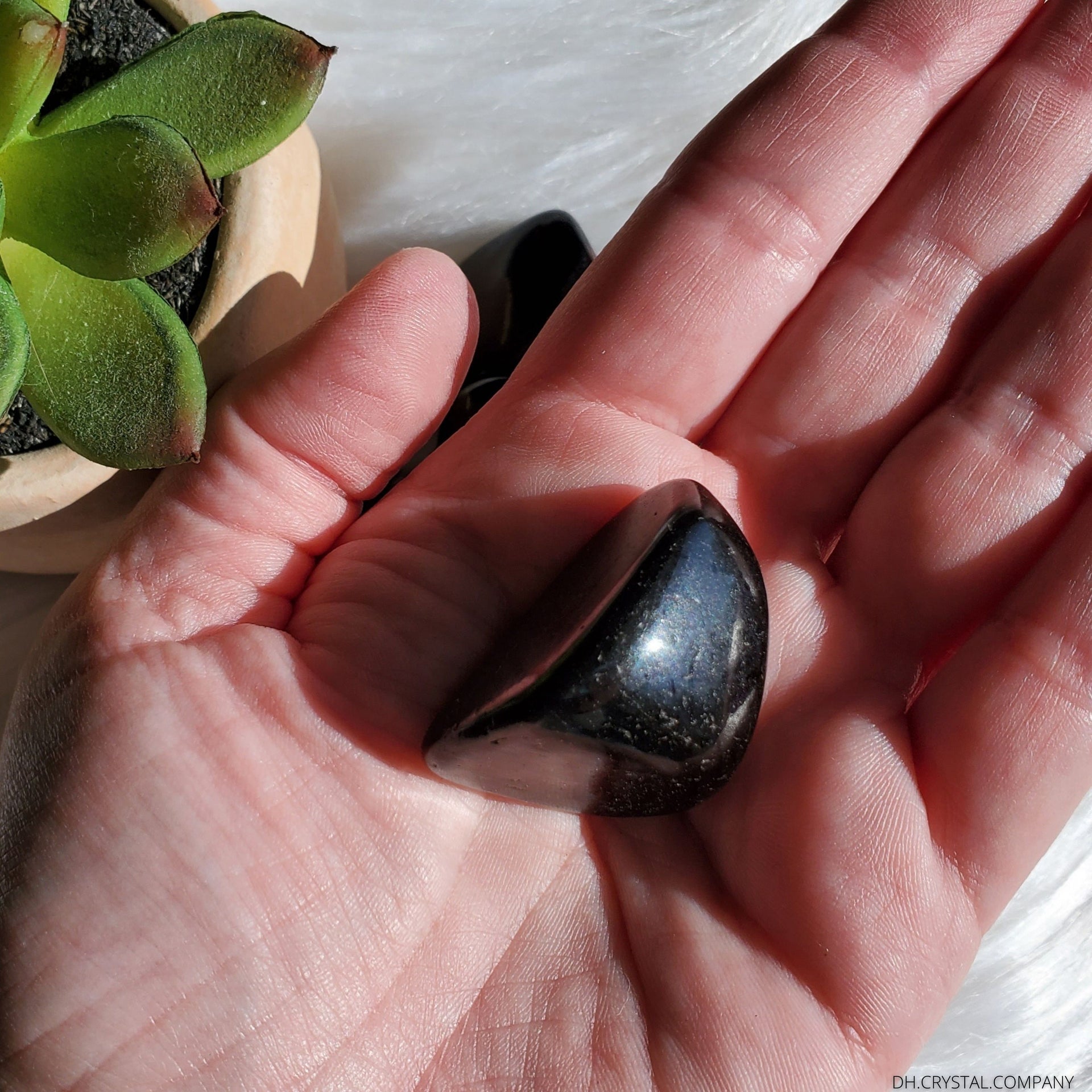
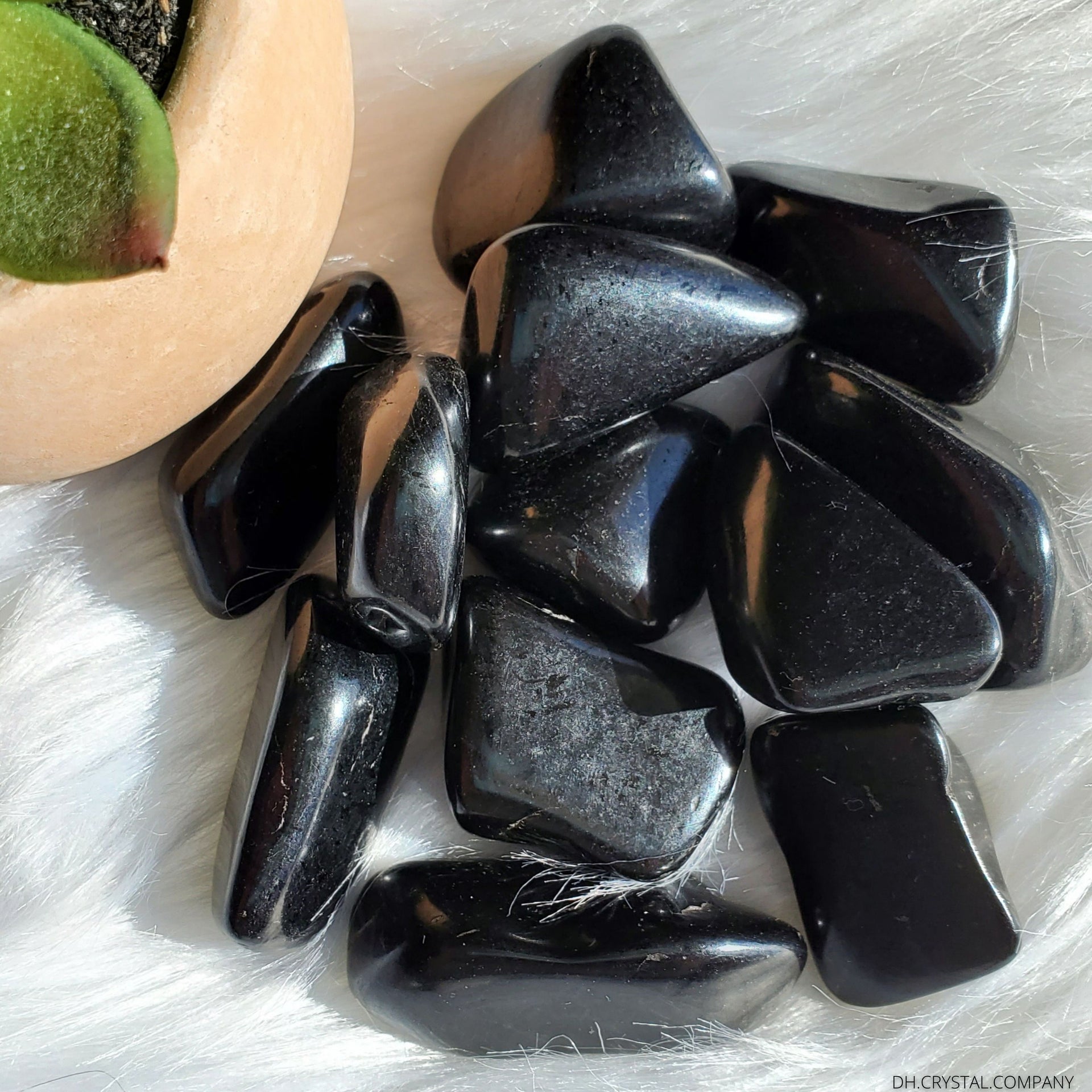
This striking Jet Tumble is one of the most historically significant and energetically powerful organic gems in the world — a jet black, lightweight stone with a warm, waxy luster that has been prized for protection, mourning, and spiritual power for over 10,000 years, making it one of the oldest continuously used gemstones in human history.
Note: Jet is an organic gem — not a mineral, but a form of lignite coal derived from the fossilized wood of ancient trees (primarily the Monkey Puzzle tree, Araucaria). It is closely related to coal but is harder, denser, and takes a brilliant polish. Jet can be distinguished from black glass imitations by its warmth to the touch (glass feels cold) and its light weight. It is also known as Black Amber in some traditions, though it is not related to true Amber. The finest Jet in the world comes from Whitby, England — known as Whitby Jet.
Where It Is Found
The world's most prized Jet comes from Whitby, North Yorkshire, England — where it has been mined from the coastal cliffs and beaches since at least the Bronze Age (approximately 1500 BCE) and was the center of a major Jet jewelry industry during the Victorian era. Queen Victoria's adoption of Jet mourning jewelry after the death of Prince Albert in 1861 made Whitby Jet internationally famous and sparked a global demand that employed thousands of craftspeople in Whitby. Other sources include Spain (Asturias, which produces "Spanish Jet" — softer and less prized than Whitby Jet), United States, France, Germany, Poland, and Turkey.
Mineral Class / Geology
Jet is an organic mineraloid — a variety of lignite coal formed from the fossilized wood of ancient Araucaria (Monkey Puzzle) trees that lived approximately 180 million years ago during the Jurassic period. The wood fell into oxygen-poor water (likely a lagoon or swamp), preventing normal decomposition, and was gradually compressed and transformed into the dense, black, carbon-rich material we know as Jet over millions of years. Whitby Jet is found in the Jurassic-age shales of the Yorkshire coast — eroding out of the cliffs and washing onto the beaches. Its hardness is approximately 2.5–4 on the Mohs scale — it is soft; handle with care and avoid scratching. Jet is electrically chargeable by friction — rubbing it produces a static charge that can attract small particles, a property noted by the ancient Greeks. The Greek word for Jet is gagates — named after the ancient city of Gagae in Lycia (modern Turkey), where it was found — which gives us the modern word "Jet" via Latin gagates and Old French jaiet.
Colors
Jet is uniformly jet black — the origin of the common English phrase "jet black" — with a warm, waxy to velvety luster when polished. It is notably lightweight compared to black stones of similar size, which is one of its distinguishing characteristics.
Metaphysical Properties
Jet is known as the Stone of Protection, Purification, and Ancestral Wisdom. It has been used as a powerful protective and purifying stone across virtually every culture that has encountered it — from Neolithic Britain to ancient Rome, Viking Scandinavia, and Victorian England. It resonates with the Root Chakra and is used to provide powerful protection against negative energies, psychic attack, and dark forces, purify and cleanse the energy field of negativity, support the grieving process and the healing of loss, connect with ancestral wisdom and the energy of those who have passed, ground and anchor one's energy to the Earth, absorb and transmute negative energy, and bring a sense of deep, ancient protection and inner strength.