
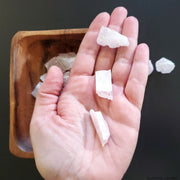
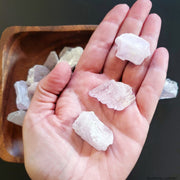
KUNZITE TUMBLE
KUNZITE TUMBLE
Kunzite
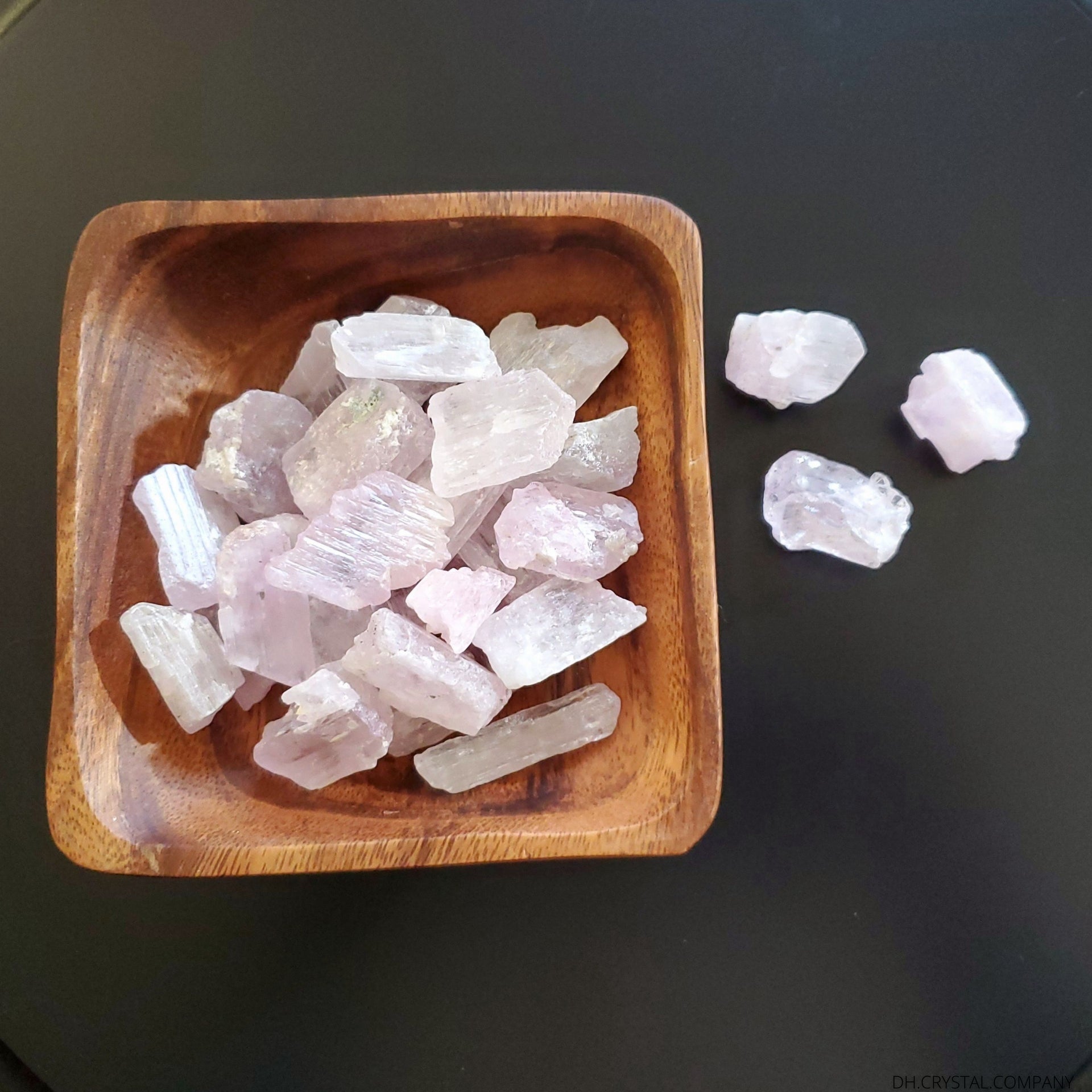
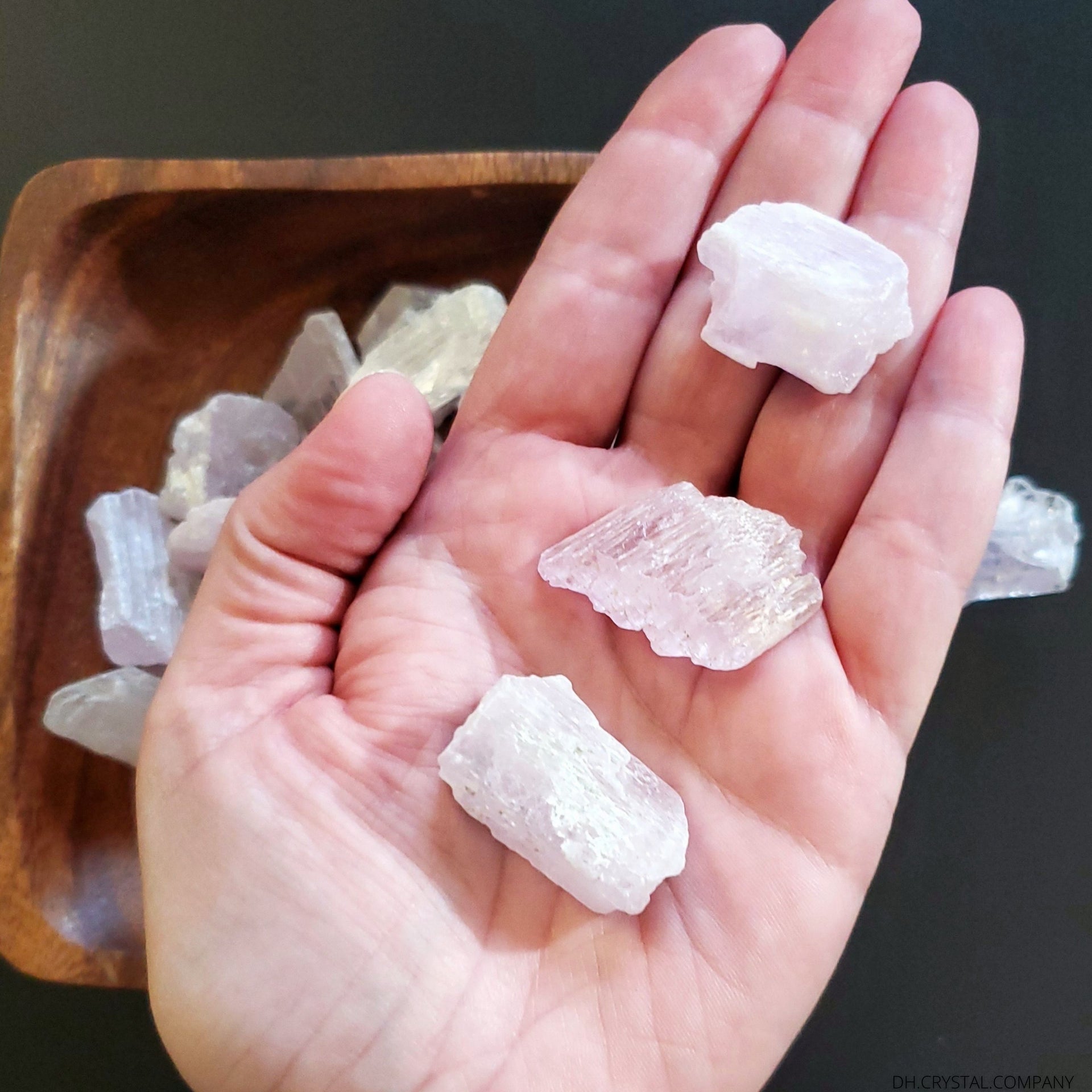
This beautiful Kunzite Tumble is one of the most exquisitely gentle and heart-opening stones in the crystal world — its delicate pale pink to lilac color and deeply loving, high-vibrational energy of unconditional love, emotional healing, and divine grace make it an exceptional companion for anyone on a journey of opening the heart and connecting with the purest frequencies of love.
Note: Kunzite is named after George Frederick Kunz (1856–1932) — the legendary American gemologist and mineralogist who served as chief gemologist for Tiffany & Co. for over 40 years and was one of the most influential figures in the history of gemology. Kunz first described this mineral in 1902 from specimens found in California. Kunzite is the pink to lilac variety of the mineral Spodumene; the green variety is called Hiddenite. Kunzite is strongly pleochroic — it displays different colors when viewed from different angles.
Where It Is Found
Kunzite is found in several locations worldwide, with major sources in Afghanistan and Pakistan (the Nuristan and Kunar provinces of Afghanistan and the Gilgit-Baltistan region of Pakistan produce some of the world's finest Kunzite), Brazil (Minas Gerais), Madagascar, Myanmar (Burma), and the United States (California — the Pala District of San Diego County, where Kunzite was first described in 1902). Afghanistan and Pakistan are the primary commercial sources of fine Kunzite in the crystal market today.
Mineral Class / Geology
Kunzite is the pink to lilac gem variety of Spodumene (lithium aluminum inosilicate, LiAlSi₂O₆) belonging to the Pyroxene group within the Inosilicate mineral class, with a hardness of 6.5–7 on the Mohs scale. It forms primarily in lithium-rich granitic pegmatites — the same geological environment that produces Tourmaline, Aquamarine, and other gem minerals. Kunzite's delicate pink to lilac color is caused by trace amounts of manganese within the Spodumene crystal structure. Kunzite is strongly pleochroic — it displays different colors (colorless, pale pink, and deeper pink/lilac) when viewed along different crystallographic axes. It also displays phosphorescence — it can glow in the dark after exposure to light or X-rays. Kunzite has perfect cleavage in two directions, making it somewhat challenging to cut as a gemstone. It is also sensitive to strong light over time — prolonged exposure to intense sunlight can cause the color to fade.
Colors
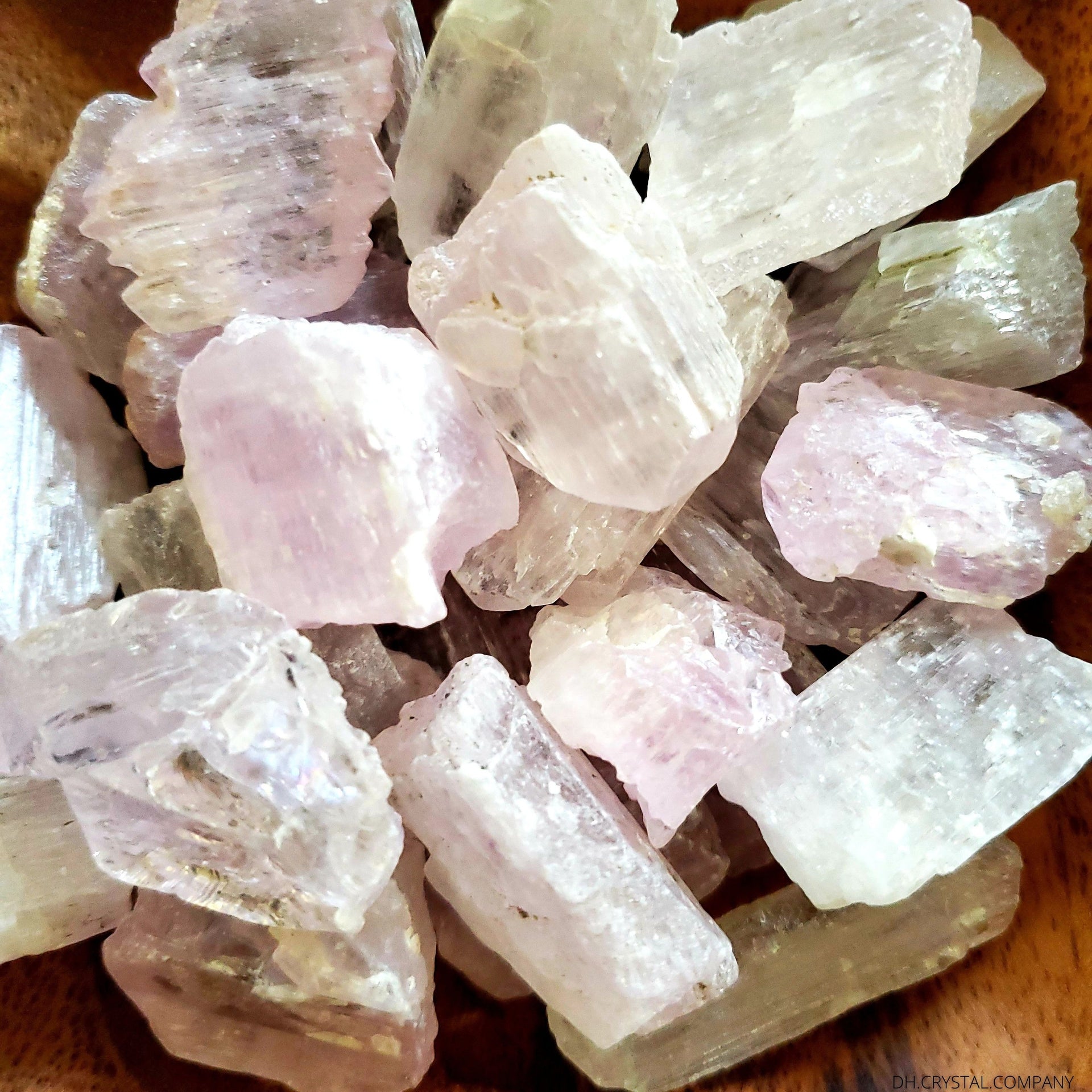
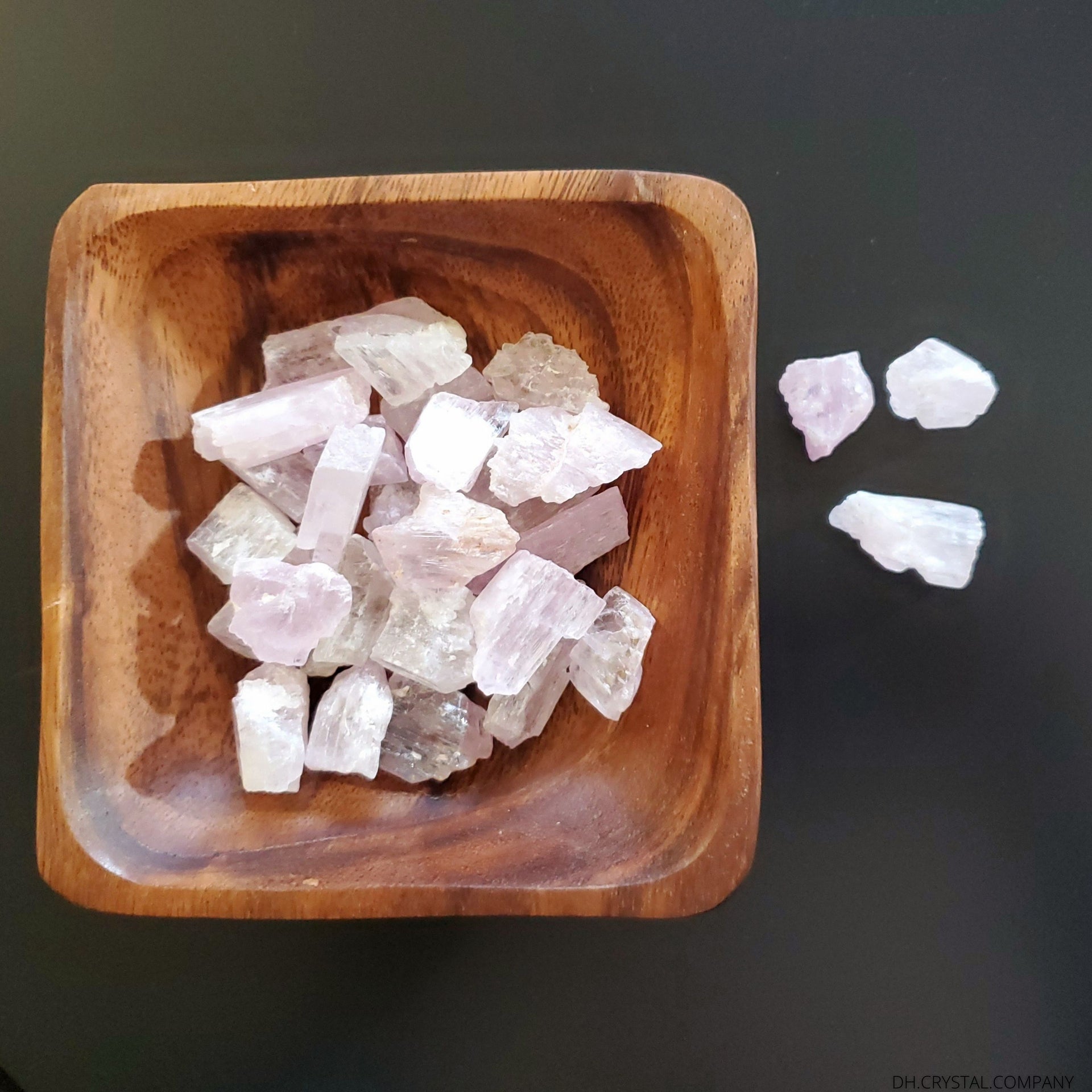
Kunzite displays a delicate spectrum of pale pink, rose pink, and lilac to violet-pink — caused by trace manganese. The color can appear different from different angles due to its strong pleochroism. Tumbled Kunzite has a smooth, silky surface that reveals its gentle, luminous pink tones beautifully.
Metaphysical Properties
Kunzite is known as the Stone of Divine Love, Emotional Healing, and the Open Heart. It is considered one of the most powerful heart-opening stones in the crystal kingdom — carrying a pure, high-vibrational energy of unconditional love, divine grace, and deep emotional healing. It resonates with the Heart and Crown Chakras and is used to open the heart to unconditional love — of self and others, heal emotional wounds, grief, and heartbreak, release fear, anxiety, and emotional armor around the heart, connect with the energy of divine love and grace, enhance self-love, self-acceptance, and compassion, support the healing of relationship wounds, and bring a profound sense of being loved, held, and supported by the universe.