
ABALONE SHELL
ABALONE SHELL
Abalone Shell
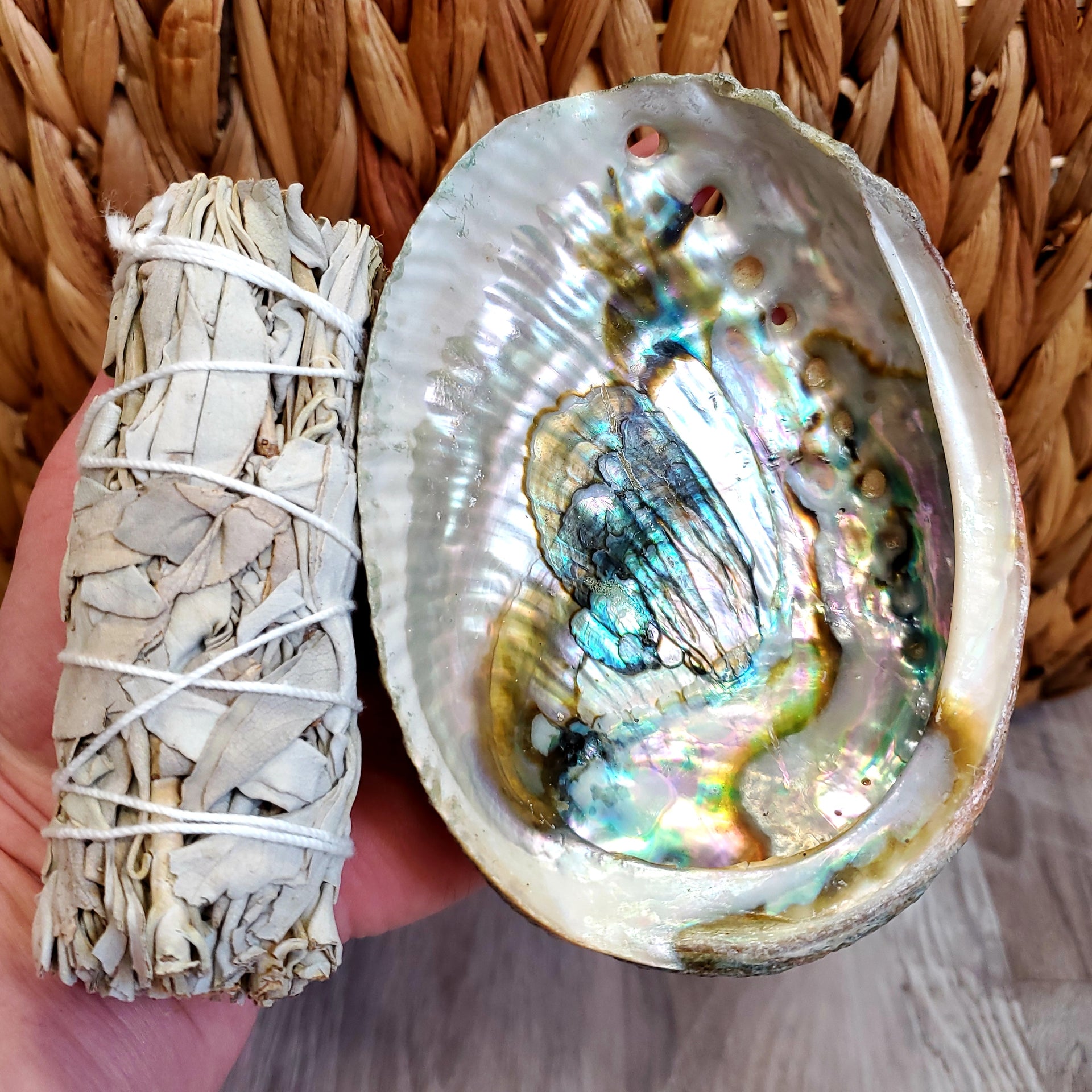
This beautiful Abalone Shell is one of nature's most spectacular organic gems — its interior surface displaying a breathtaking, ever-shifting rainbow of iridescent blues, greens, purples, and golds that has captivated humans for thousands of years, and its deep connection to the ocean, emotional healing, and sacred ceremony makes it one of the most meaningful and versatile tools in the crystal and spiritual practice world.
Note: Abalone Shell is an organic gem — it is not a mineral, but the shell of the Abalone sea snail (genus Haliotis). It is widely used as a smudging bowl for burning sage, Palo Santo, and other sacred herbs, as well as in jewelry, ceremony, and spiritual practice. Abalone is a protected species in many regions due to overharvesting — always source from reputable, sustainably harvested suppliers.
Where It Is Found
Abalone (genus Haliotis, meaning "sea ear" in Greek — a reference to the shell's ear-like shape) is found in cold coastal waters worldwide, with major populations along the coasts of South Africa, New Zealand, Australia, Japan, the United States (California, where the Red Abalone is native), and Mexico. Different species produce shells with different color characteristics — South African Paua Abalone (from New Zealand) is particularly prized for its vivid blue-green iridescence. Abalone has been harvested by coastal peoples for food and ceremonial use for tens of thousands of years — Abalone shell beads found in South Africa's Blombos Cave date to approximately 75,000 years ago, making them among the oldest known personal ornaments in human history.
Composition and Structure
Abalone Shell is composed of aragonite (calcium carbonate, CaCO₃) — the same mineral found in pearls and coral — arranged in a microscopic layered structure called nacre (mother-of-pearl). Nacre is composed of millions of microscopic hexagonal platelets of aragonite stacked in overlapping layers, bound together by a protein called conchiolin. The spectacular iridescence of Abalone Shell is caused by thin-film interference — light entering the nacre reflects off the multiple layers of aragonite platelets at different depths, causing the light waves to interfere with each other and produce the shifting rainbow of colors. The thickness of the nacre layers determines which colors are produced — thicker layers produce reds and oranges; thinner layers produce blues and greens. Abalone nacre is also one of the toughest natural materials known — its layered "brick and mortar" microstructure makes it approximately 3,000 times tougher than the aragonite crystals it is made from, a property that has inspired the development of new synthetic materials.
Colors
The interior of Abalone Shell displays a breathtaking, ever-shifting rainbow of iridescent blues, greens, purples, teals, and golds — caused by thin-film interference in the nacre layers. The colors shift and change with every movement and change in lighting, creating a living, dynamic display of color unlike any other natural material. The exterior of the shell is typically rough and grey-brown.
Metaphysical Properties
Abalone Shell is known as the Shell of the Ocean, Emotional Healing, and Sacred Ceremony. It has been used in spiritual ceremony by Indigenous peoples of the Americas, Pacific Islands, and coastal cultures worldwide for thousands of years. It resonates with the Water element and the Heart, Throat, and Third Eye Chakras and is used as a sacred vessel for smudging ceremonies (holding burning sage, Palo Santo, or other herbs), connect with the healing, cleansing energy of the ocean, support emotional healing, calm, and the release of grief and trauma, enhance intuition, psychic sensitivity, and connection to the divine feminine, bring a sense of peace, flow, and gentle strength, honor and connect with ancestral and Indigenous spiritual traditions, and amplify the cleansing and purifying energy of smudging herbs.