

ANGELITE TUMBLE
ANGELITE TUMBLE
Angelite
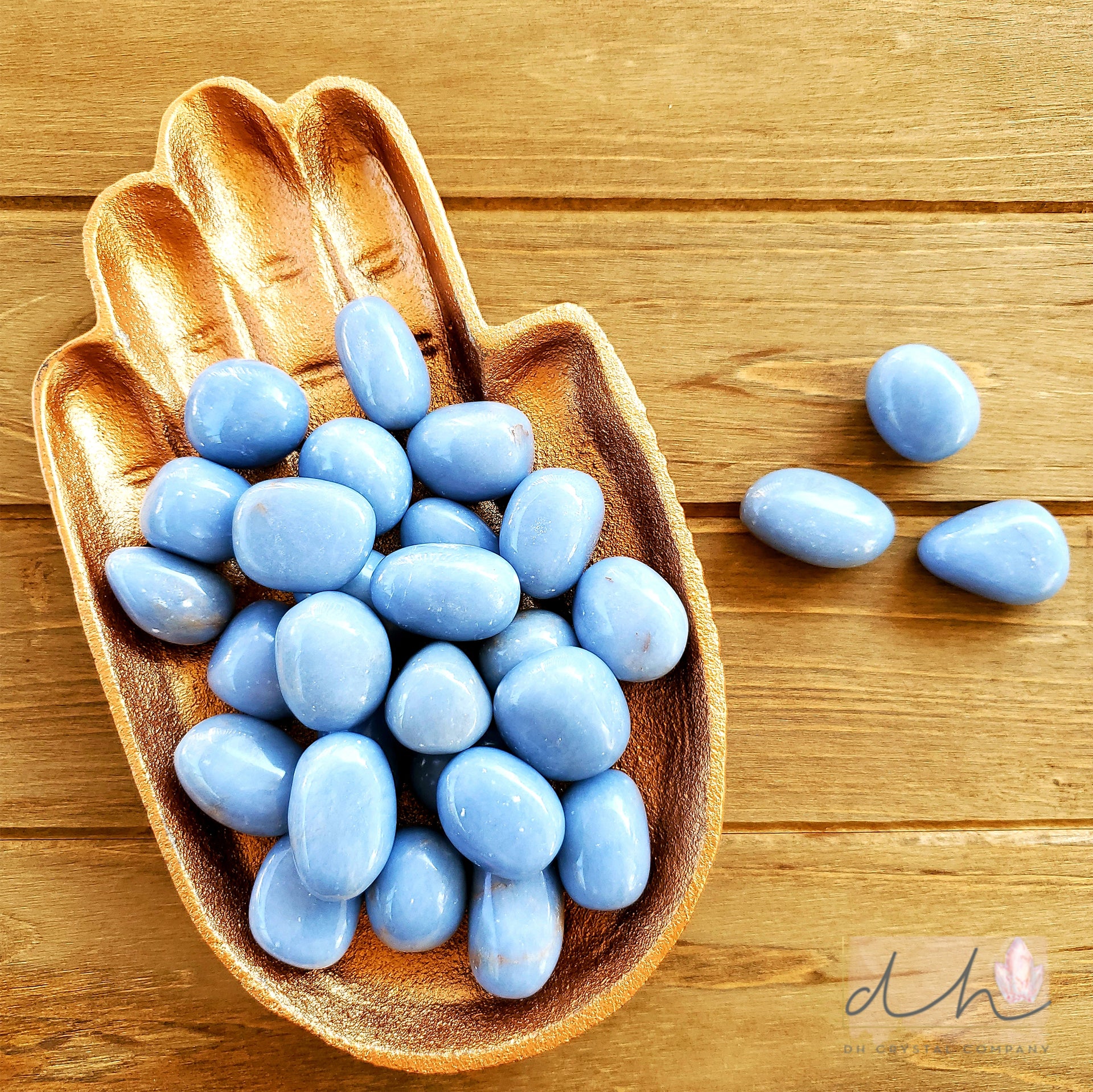
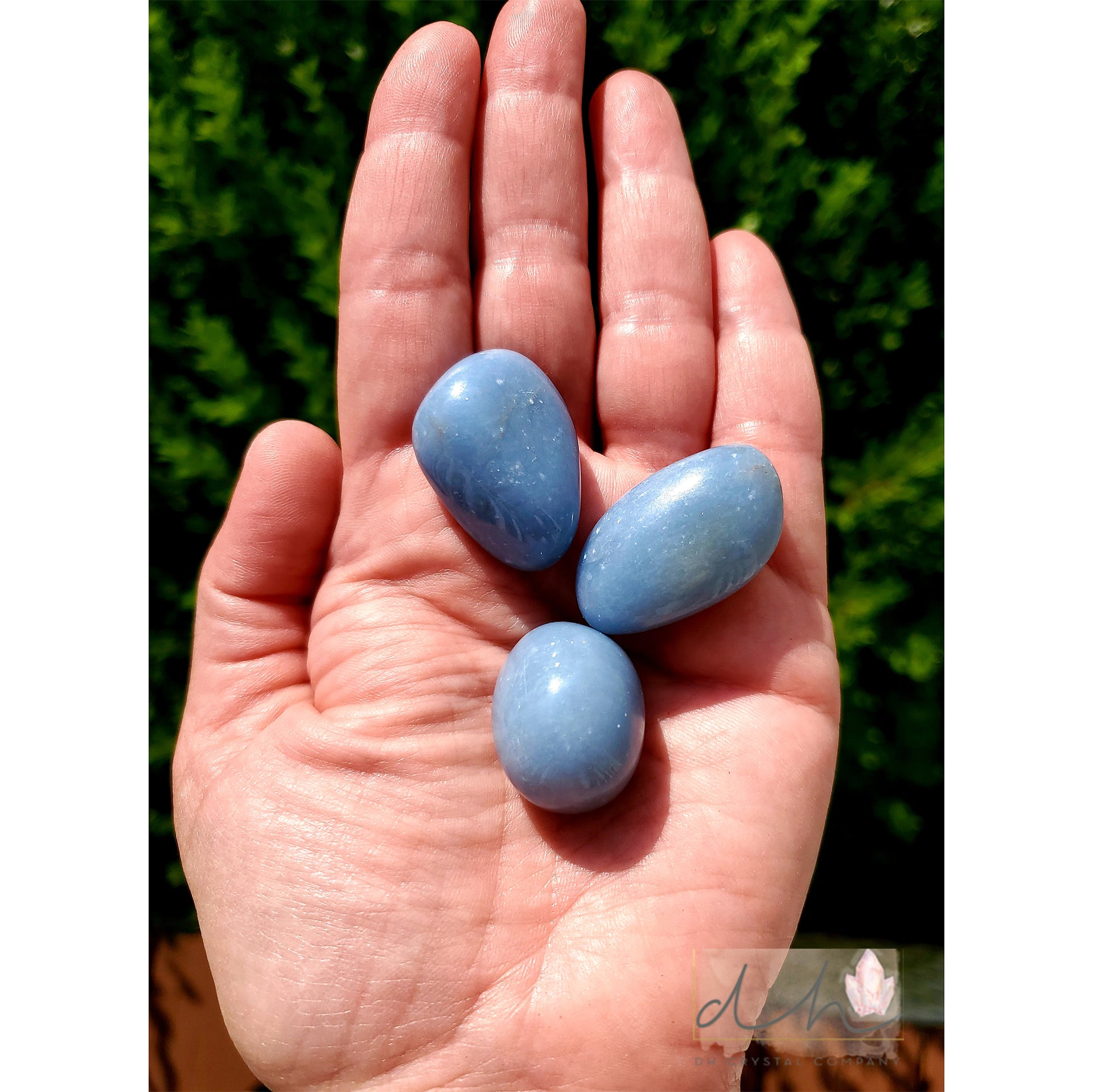
This beautiful Angelite Tumble is one of the most serene and spiritually uplifting stones in the crystal world — its soft, powder blue color and gentle, high-vibrational energy of angelic connection, peace, and compassionate communication make it an exceptional companion for anyone seeking to deepen their spiritual practice, enhance their intuition, or simply bring a sense of profound calm and heavenly peace into their daily life.
Note: Angelite is a trade name used in the crystal market for a specific blue-grey variety of Anhydrite found in Peru. It is not a separate mineral species — mineralogically it is Anhydrite. The name "Angelite" was coined in 1987 to reflect its metaphysical association with angelic communication and its soft, sky-blue color. Angelite is formed from Celestite (celestine) that has been compressed over millions of years — making it mineralogically related to Celestite. Angelite is water-soluble over time — do not soak in water or use for water elixirs.
Where It Is Found
Angelite is found primarily in Peru — the world's primary and most significant commercial source, where it was first discovered and named in 1987. It is also found in Britain, Germany, Poland, Libya, and Egypt, though Peruvian Angelite dominates the crystal market. The Peruvian deposits are found in ancient evaporite formations where Celestite was compressed and transformed into Anhydrite over millions of years.
Mineral Class / Geology
Angelite is a blue-grey variety of Anhydrite (calcium sulfate, CaSO₄) belonging to the Sulfate mineral class, with a hardness of only 3–3.5 on the Mohs scale — it is a soft mineral; handle with care, avoid scratching, and keep away from water and moisture. Anhydrite forms in evaporite deposits — sedimentary formations created by the evaporation of ancient seas or lakes, where calcium sulfate precipitates from the brine. Its name comes from the Greek anhydros, meaning "without water" — distinguishing it from its hydrated form, Gypsum (calcium sulfate dihydrate, CaSO₄·2H₂O). Angelite specifically forms when Celestite (strontium sulfate, SrSO₄) — the blue mineral famous for its sky-blue crystals — is compressed under geological pressure over millions of years, causing it to transform into Anhydrite while retaining a similar blue color. This geological relationship between Angelite and Celestite is reflected in their shared metaphysical properties of angelic connection and spiritual elevation. Anhydrite is also closely related to Gypsum — when exposed to water over time, Anhydrite slowly absorbs water and converts back to Gypsum, which is why Angelite should be kept dry.
Colors
Angelite displays a soft, powder blue to blue-grey color — pale and serene, evoking the color of a clear winter sky. It is opaque with a waxy to pearly luster. The color can vary from very pale blue-white to a more saturated medium blue depending on the specimen.
Metaphysical Properties
Angelite is known as the Stone of Angelic Connection, Peace, and Compassionate Communication. Its soft blue color and gentle, high-vibrational energy make it one of the most powerful stones for connecting with angelic realms, spirit guides, and higher-dimensional beings. It resonates with the Throat, Third Eye, and Crown Chakras and is used to facilitate communication with angels, spirit guides, and higher realms, enhance telepathy and psychic awareness, promote peace, calm, and a sense of divine protection, support compassionate, loving communication, enhance meditation and access to higher states of consciousness, connect with one's higher self and spiritual purpose, support astral travel and out-of-body experiences, and bring a profound sense of being held in angelic love and light.